
Designer advice: How to Have Fun with Patterned Bathroom Tiles

From striking floors to statement shower walls, patterned tiles are a brilliant way to give your bathroom personality. Here, Carrie, Designer from Ripples Lindfield, shares her expert tips on how to use them with confidence and create a room that feels playful, considered and completely your own.
Bathrooms are often designed with longevity in mind, which can make it tempting to play it safe. Neutral colours, simple finishes and understated tiles will always have their place, but timeless does not have to mean characterless. The right pattern can bring energy, warmth and individuality to a bathroom while still creating a space you will love for years to come.
Whether you are drawn to bold geometrics, intricate motifs, soft botanical designs or tiles inspired by traditional encaustic patterns, there are plenty of ways to introduce something a little more adventurous. Pattern does not need to cover every surface to make an impact, either. Used thoughtfully, even a small area of unusual tiling can transform the whole room.
Make the floor the feature
A patterned floor is one of the easiest ways to add interest without overwhelming the room. It creates a strong foundation for the design and naturally draws the eye through the space, making it particularly effective in cloakrooms, ensuites and bathrooms with a simple layout.
For a confident look, choose a tile with a bold repeating motif and allow it to run across the entire floor. Keeping the walls quieter will give the pattern room to breathe: think soft painted finishes, simple wall tiles or a subtle tonal texture. Picking out one of the colours from the floor elsewhere in the scheme, perhaps through a vanity unit, towel or painted wall, will help everything feel connected.
Patterned floor tiles can also be a clever choice in busy family bathrooms. As well as bringing personality, a detailed design can be more forgiving of the splashes, watermarks and everyday signs of use that are inevitable in a hardworking space.
Create a statement shower wall
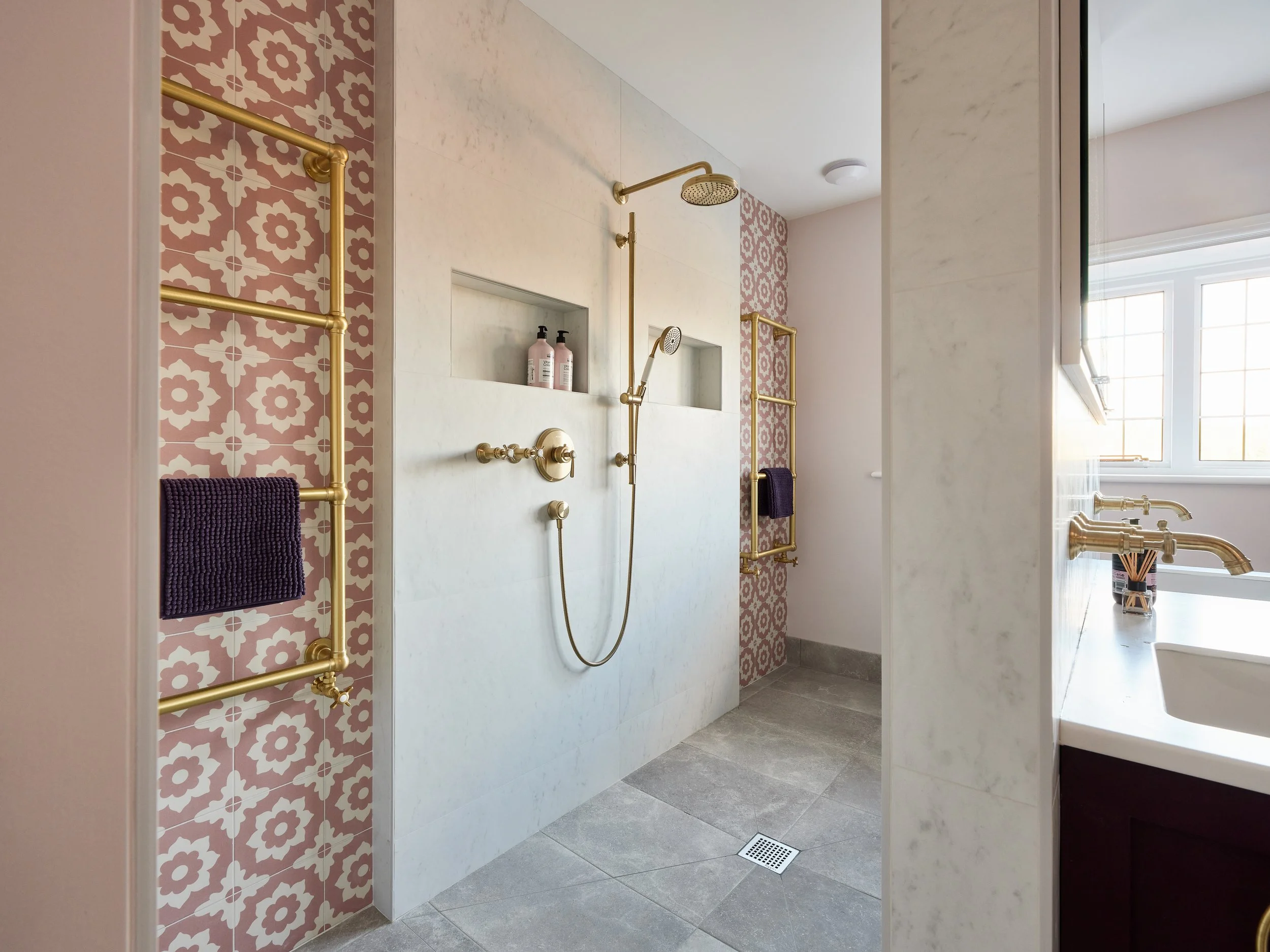
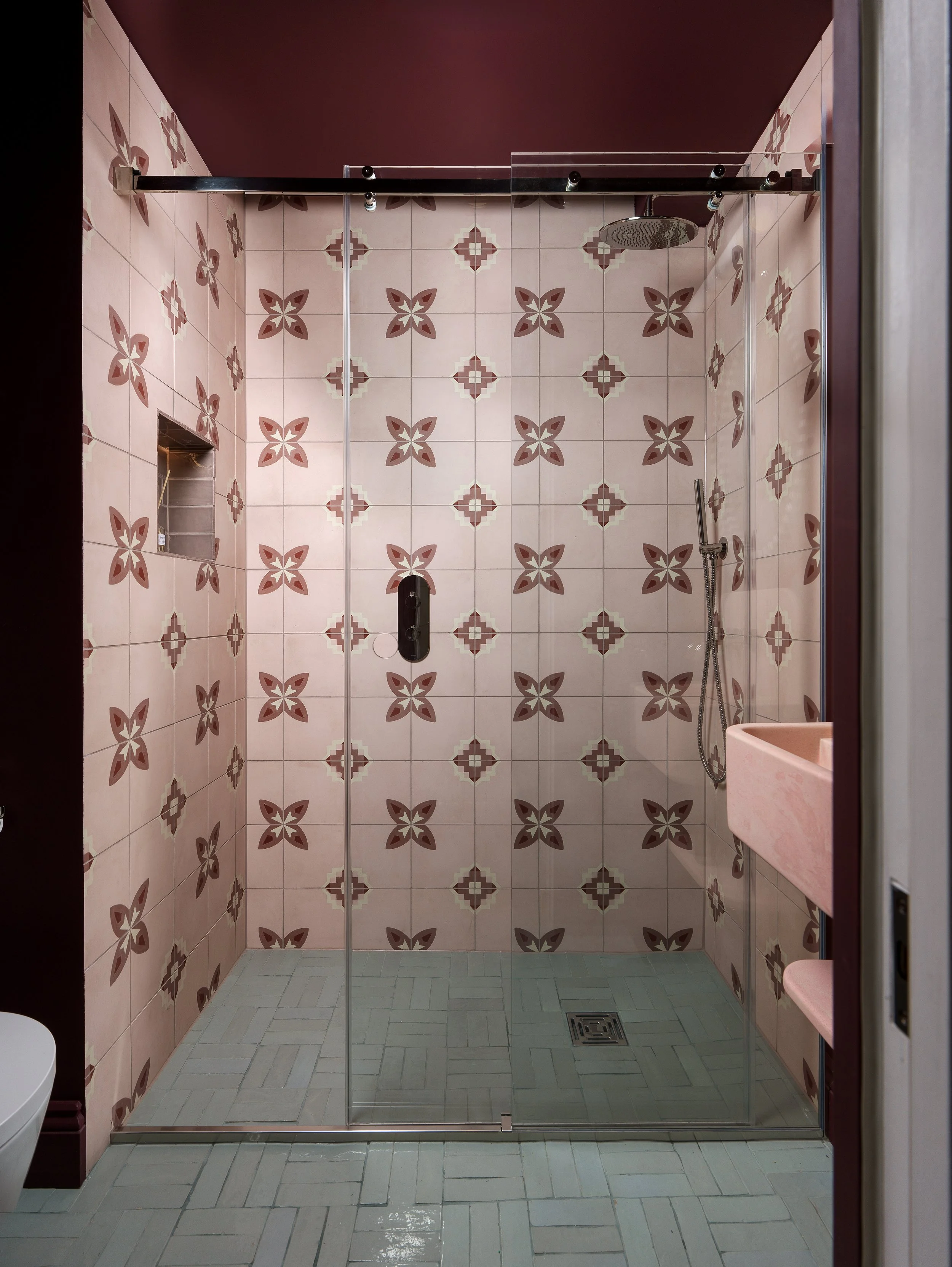
The shower is a natural focal point, so why not make more of it? Covering the main shower wall in patterned tiles can turn a practical area into the standout feature of the bathroom, almost like a piece of artwork.
In a walk-in shower, pattern can help define the zone while maintaining an open, spacious feel. For an enclosed shower, it creates a more immersive effect and offers a wonderful moment of surprise. If the pattern is especially detailed or colourful, use it on one wall and choose a coordinating plain tile for the remaining surfaces. This keeps the overall look balanced and allows the feature wall to command attention.
Consider how the pattern will line up before installation begins, particularly around brassware, screens and niches. A carefully planned layout can be the difference between a feature that simply looks good and one that feels truly considered.
Frame the room with a border
Patterned borders are a lovely way to introduce decorative detail on a smaller scale. A slim run of tiles can frame a bath, follow the perimeter of the room or break up a larger expanse of plain tiling. This approach works particularly well if you enjoy pattern but do not want it to dominate the space.
Borders can also be used to add a sense of structure. Try running one at dado height to divide two complementary wall finishes or use a vertical border to draw attention to a particular feature. Traditional motifs can bring charm to a period property, while crisp geometrics will give the same idea a more contemporary edge.
For a cohesive finish, choose a border tile that shares a colour with the surrounding surfaces. The pattern will still stand out, but it will feel integrated rather than added as an afterthought.
Turn a tiled niche into a design detail
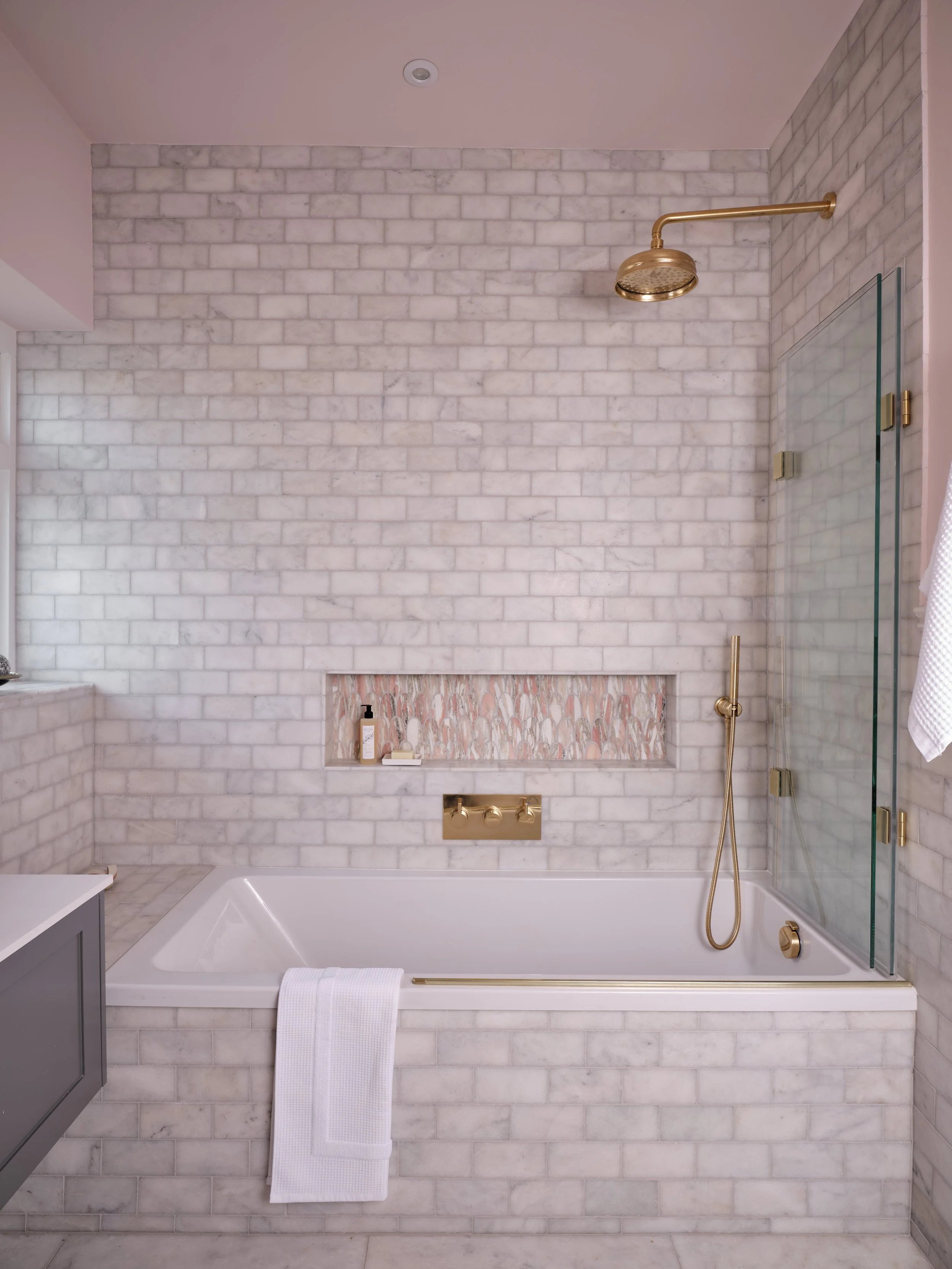
A shower or bath niche may be practical, but it is also the perfect place to have a little fun. Lining the back of a niche with a patterned tile creates a small but impactful focal point and is an ideal way to use a design you love without committing to a whole wall.
This works beautifully with tiles in rich colourways, intricate patterns or contrasting shapes. You could repeat a tile used on the floor to tie the room together, or introduce a completely different design that shares the same tones. Framing the niche with a coordinating tile trim or metal finish will make the detail feel neat and intentional.
Because the area is relatively small, a tiled niche is also a good opportunity to choose something especially decorative or luxurious. It proves that even the most functional details can contribute to the overall character of a bathroom.
Let simple sanitaryware balance the pattern
When the tiles are doing the talking, the rest of the room does not need to compete. Simple sanitaryware gives patterned surfaces a calm backdrop and helps the finished scheme feel sophisticated rather than busy.
Clean-lined basins, baths and WCs work especially well, while a restrained vanity unit can anchor the design. White sanitaryware is always a reliable choice, but soft neutrals and natural wood finishes can also sit beautifully alongside pattern. Brassware offers another opportunity to complement the tile: brushed brass can warm up earthy or jewel-toned designs, while chrome or brushed nickel suits cooler palettes and sharper geometrics.
The key is not to strip the room of personality elsewhere, but to create a clear hierarchy. Decide which element should be the star and let the supporting pieces enhance it.
Mixing patterns without creating chaos
More than one pattern can work in a bathroom, provided there is something to connect them. Colour is often the simplest link. A geometric floor and decorative niche, for example, can sit happily together if they share one or two tones.
Scale matters too. Pairing a larger, more open motif with a smaller and more detailed pattern creates contrast without making the room feel confused. You can also treat the layout of plain tiles as a subtle second pattern: vertical stacks, herringbone formations and contrasting grout all add movement without competing with the main design.
Before making a final decision, place samples together in the room and look at them throughout the day. Natural and artificial light can change both colour and contrast, so it is important to see how the combination feels in the space itself. A bathroom designer can help you refine the balance, visualise the finished scheme and plan where every tile should begin and end.
Find a pattern that feels like you
The most successful bathrooms are not simply designed around what is fashionable; they reflect the people who use them. Patterned tiles offer the freedom to introduce colour, movement and a sense of fun, whether you choose one small decorative detail or build the entire scheme around a tile you cannot stop thinking about.
Visit your nearest Ripples showroom to explore our collection of patterned tiles and discover how our experienced designers can use them to create a bathroom that feels beautifully balanced and completely personal to you. Book your free design consultation today.
Book a design appointment with your local Ripples showroom today and discover how heating can transform your bathroom into a sanctuary.

For more bathroom advice from our team of specialist bathroom designers, download or request a copy of our free Style Guide.
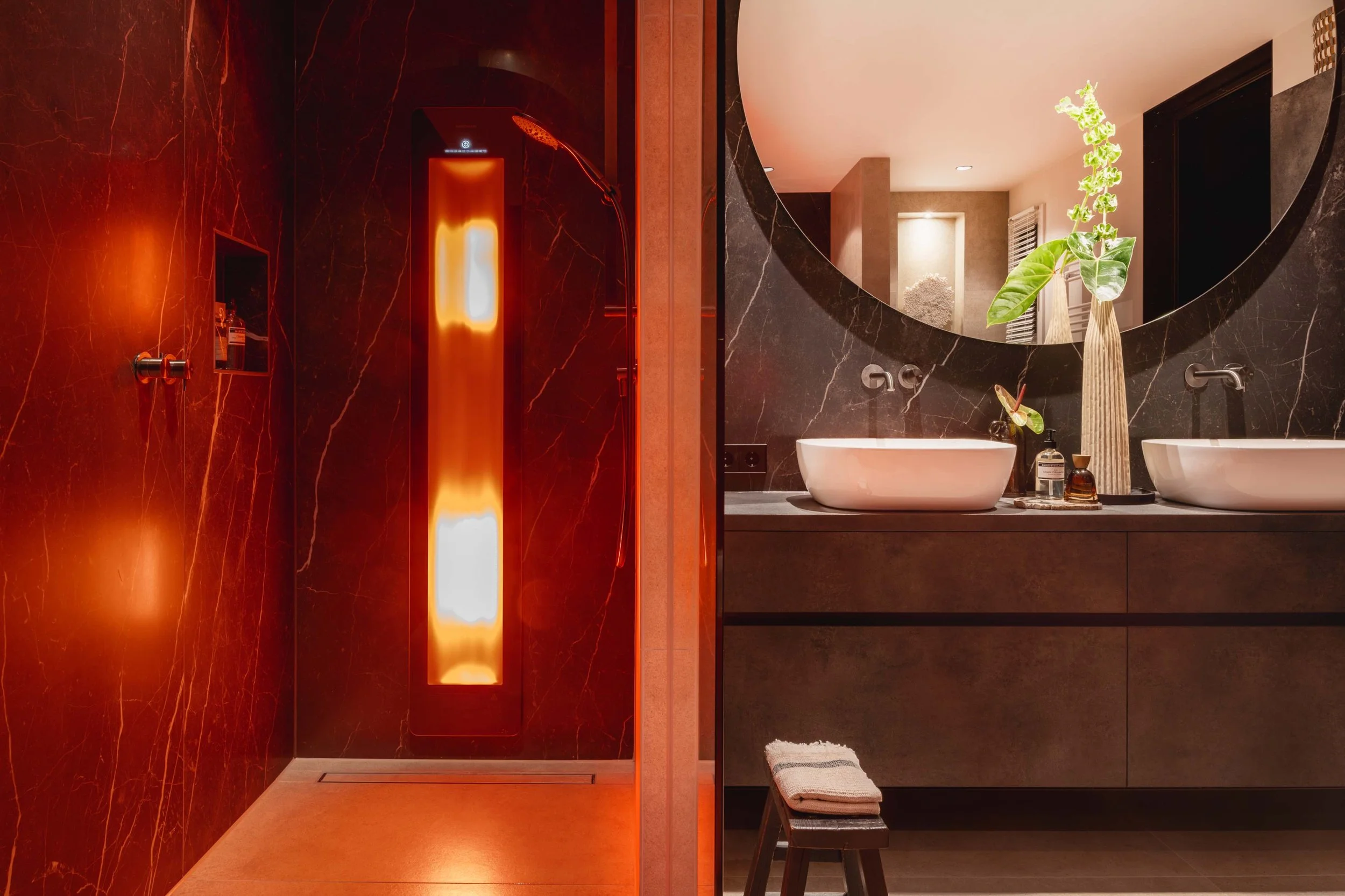
Our homes are no longer just places to live, they’ve become spaces to recharge. And nowhere embodies that shift more than the bathroom.